You have spent weeks, perhaps years, looking at the what of your recurring arguments.
The dishes. The schedule. The money. The tone of voice. The comment that landed badly. The question that somehow became an accusation. You’ve dissected the words, tracked the logistics, and replayed the tape of who said what. Yet, despite the effort, you find yourself back in that familiar space where the air feels thin and the static starts to rise.
It is an exhausting way to live. If you feel depleted by the repetition, it is not because you aren’t trying. It is because you are likely trying to solve a problem that isn’t actually about the topic on the table.
What you are carrying right now is not a lack of love, nor is it a sign that you and your partner are fundamentally incompatible. It is the natural result of two people trying to navigate a relational field that has become crowded with interference. It makes complete sense that you are tired.
It doesn't care about the schedule or the dishes. It cares about safety. It begins scanning for signals of rejection, blame, or abandonment.
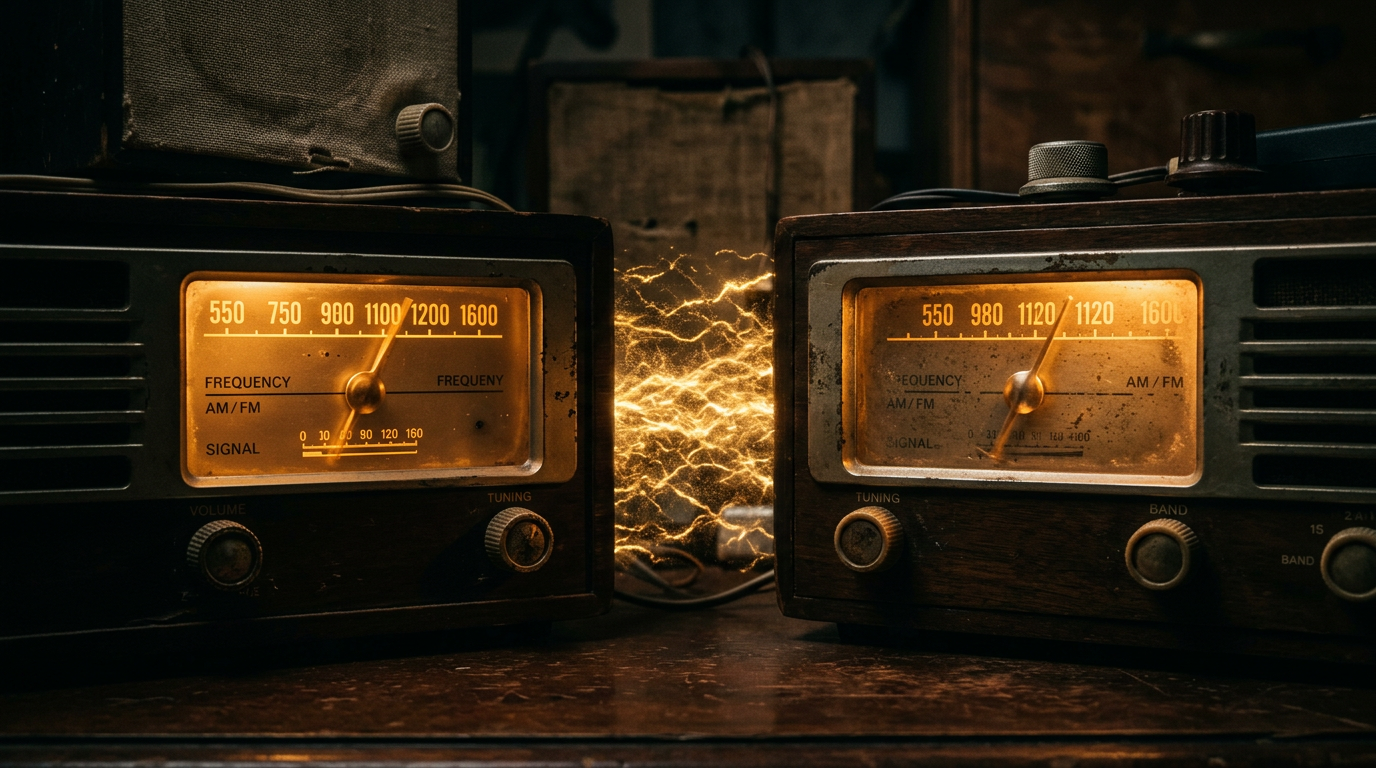
Think of it like a radio frequency. In a healthy moment, your signals are clear. You speak, they hear; they speak, you hear. But when the threat response is triggered, the frequency becomes flooded with static. The voltage increases, but the clarity drops to zero. You aren't just talking anymore; you are broadcasting a distress signal, and your partner is doing the same.
In this high-voltage state, we almost always adopt a Role.
A Role is the involuntary armor we put on to protect ourselves when the relational ground starts to move. It is a strategy for safety that we learned long ago. For some, this protection looks like The Investigator. You ask one more question, then another. You search for the inconsistency or the missing detail, believing that if you can just get a clear broadcast of the facts, you will finally feel secure.
For others, the Role is The Defender. You explain the context. You clarify your intent. You build a case like a lawyer in a courtroom because being misunderstood or seen as the "bad guy" feels like a terminal threat to the connection.
The tragedy of the loop is that these protective moves are often perfectly misaligned. The Investigator sends out a sharp signal for clarity; The Defender hears it as a surge of blame and increases their insulation. The more one person broadcasts a need for answers, the more the other scrambles to shield themselves with explanations.
At this point, you are no longer two people trying to solve a problem. You are two protective strategies reacting to the static created by the other. You aren't arguing about the money or the weekend anymore. You are reacting to what the other person’s armor is doing to your sense of safety.
Once you can name the Role, the argument changes. It stops being a story about who is difficult or who is right. It reveals that the intensity of the broadcast is actually a measure of the fear underneath.
What you called a fight was always a search for safety. It just forgot to leave room for either of you to be seen.
This is not a failure of your love. It is the involuntary armor of your fear.