You have spent months, perhaps years, looking at the what of your recurring arguments.
The dishes. The schedule. The money. The comment that landed badly during dinner. The question about the weekend that somehow became an accusation by the time the coffee was poured.
Last week, we looked at what happens when a conversation exceeds its capacity. We acknowledged that sometimes, continuing to push for resolution simply creates more heat without any light.
But that leaves a lingering question.
Why do we keep going? Why do we repeat the same moves when we already know exactly where they lead?
The answer is not simply that we are failing at communication. It is not that you haven't found the right combination of words or that your partner is intentionally being difficult.
It is that somewhere along the way, the conversation stops being about solving a problem and starts being about protecting ourselves. When the relational field feels uncertain, we stop trying to be understood and start trying to be safe. It makes complete sense that you would reach for armor when the ground starts to move.
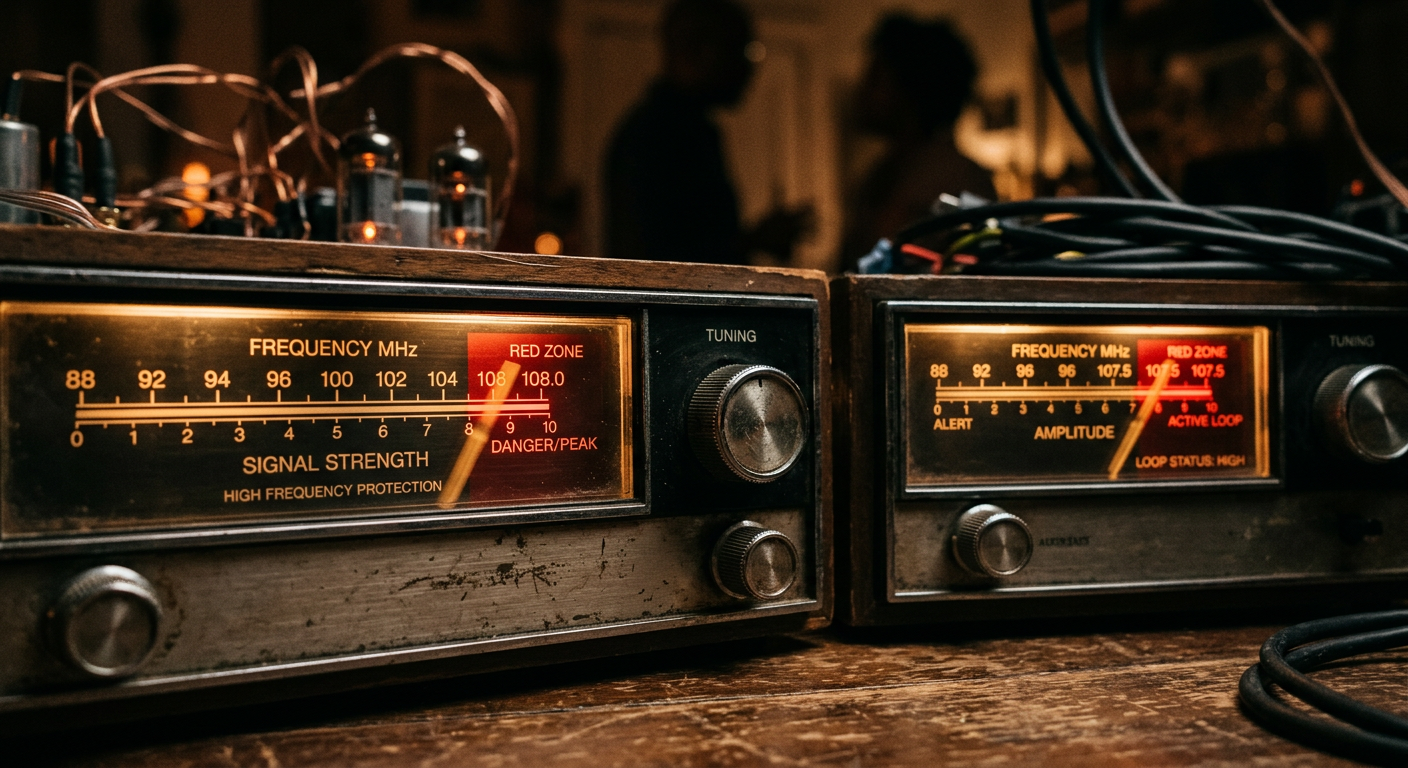
To understand this, we have to look at the signal and the noise. In a high-pressure conversation, your nervous system is like a receiver trying to catch a clear broadcast. When the pressure rises, the amygdala—the brain’s threat detection center—starts scanning for interference. It doesn't distinguish between a physical threat and a relational one; it just senses "danger" and begins to broadcast a defense signal.
This signal creates what I call a Role. A Role is a protective strategy that clicks into place to manage the static of an uncertain connection.
For one person, protection looks like The Investigator. You search for the missing detail, the inconsistency, or the explanation that will finally make the frequency clear. You ask another question, then another. It sounds like curiosity, but underneath, it is a desperate search for the certainty required to lower the internal voltage.
For another, protection looks like The Defender. You clarify what you meant. You correct the record. You build a case. You broadcast a stronger signal to drown out the perceived blame, because being misunderstood feels like losing your place in the circuit.
This is where the loop becomes a closed circuit.
The Investigator broadcasts a sharper question to get clarity. The Defender senses the high voltage of that question as an attack and increases their output to justify their position. The more the Defender explains, the more the Investigator suspects that the "true" signal is being avoided. The static grows louder. The interference becomes the only thing either of you can hear.
At this point, you are no longer two people trying to decide who picks up the groceries. You are two protective strategies reacting to each other’s interference.
Your protective move changes your partner’s experience. Their reaction activates their own Role. Their Role changes your experience, and your own broadcast becomes even more intense. The loop is no longer about the dishes; it is a collision of defenses.
When you are inside this static, it is easy to see your partner as the source of the noise. What looked like interrogation was actually a fear of uncertainty. What looked like withdrawal was an attempt to avoid making the interference worse. What looked like over-explaining was a frantic attempt to stay connected by finally being heard.
Once you can see the Role, the argument begins to change shape. It stops being a story about who is right and becomes a story about who is feeling threatened. The goal is not to rip off the armor while the current is still high. It is simply to recognize that you have put it on.
When you can name the broadcast, you have a chance to remember the person underneath the static.
This is not a failure of your love. It is a collision of defenses.