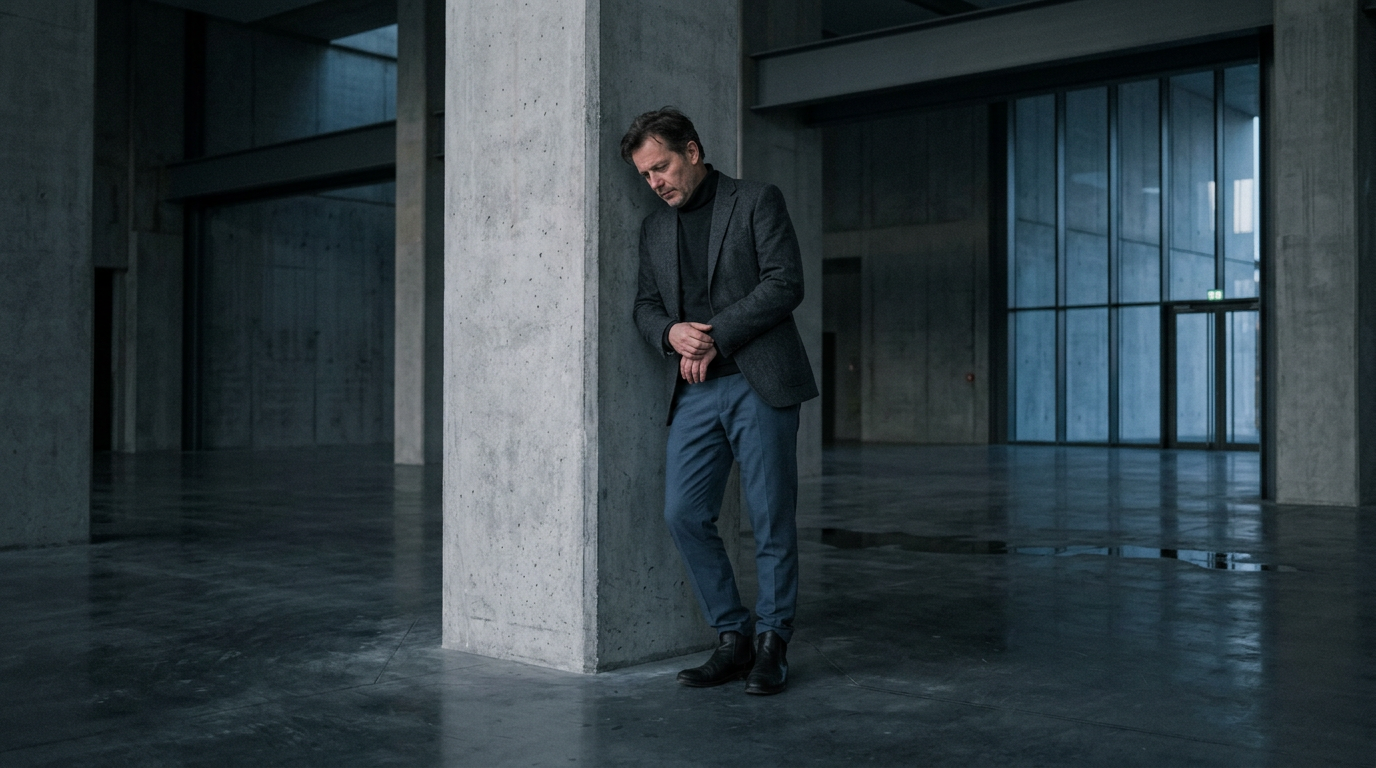
You are sitting at the dinner table, and you can feel the air in the room. It is a quiet skill you’ve developed over the years—sensing the subtle shift in your partner's tone, the slight tension in the way a glass is set down, the unspoken drift that starts to happen after a long day. Without thinking, you adjust. You offer a specific kind of reassurance, you pivot the conversation to something stable, or you simply pick up the slack of the evening's chores so the mood doesn't dip further. You do this because you can. You do it because you are the one who knows how to hold things together.
For a long time, this was your pride. You are the reliable one. You are the person people call when things are falling apart because they know you won't buckle. In your professional life, this competence has made you a leader. In your private life, it has made you the anchor. You are the human scaffolding that ensures the structure of your world never collapses, and because you are consistent and resilient, everyone around you has learned to lean on that strength.
But lately, something has changed. The strength that used to feel like a superpower has started to feel like a weight you can’t put down. You aren't just tired from work or the busyness of the week. You are experiencing a specific, heavy fatigue that sleep cannot touch. It is the kind of exhaustion that settles into your bones when you realize that if you stop holding the bridge up, the bridge stops existing.
The Weight of Being the Better Half
It is a strange feeling to be doing everything "right" and yet feel so empty. On paper, your life is a success of responsibility. You are proactive, you are patient, and you are the stabilizer. You are the one who anticipates the needs of the household before they are even voiced. You smooth over the ripples in your relationship before they can become waves. You have become a bridge that never rests, and because you are so good at it, no one notices the strain on the cables.
This is the burden of the better half. It is the invisible cost of being the person who handles it all. You are surrounded by people who love you, yet you find yourself inhabiting the loneliness of the leader. You are the one responsible for the "us," and that responsibility has a way of making you feel fundamentally alone. You look across the room at your partner and wonder why they don't see the heaviness you are carrying, but the truth is difficult to face: you have made it look effortless.
You have been so strong for so long that "strength" has become your entire identity. Your competence has become a cage. Because you can handle the load, you do. And because you do, the other person doesn’t have to. Without realizing it, you have over-functioned for so long that your strength is no longer a choice—it is a requirement for the relationship to survive. You are functional, but you are drained.
The High-Performer’s Secret Fatigue
This isn't about a lack of effort. In fact, it’s the result of too much effort. You’ve been operating under the assumption that if you just work harder, be more patient, and carry more of the load, things will eventually balance out. You keep waiting for the moment when you can finally set the weight down and let someone else lead. But that moment never seems to arrive. Instead, the more you carry, the more the relationship seems to rely on you carrying even more.
There is a silent erosion happening in the corners of your life. Every time you step in to fix, to carry, or to bridge the gap, a small piece of genuine connection is traded for functional stability. You are keeping the relationship moving forward, but you are doing it from a place of deep, quiet resentment. You are keeping the peace, but you aren't finding any peace for yourself.
Why does being the strongest person in the room feel so heavy? It feels heavy because strength, when used as a shield against chaos, eventually becomes a wall against intimacy. You aren't just tired; you are relationally depleted. You are standing on the bridge you built, realizing that while it’s holding everyone else up, it’s cracking under your own feet.
Looking at the Scaffolding
This isn't an indictment of your partner, nor is it a sign that you are "broken." It is a recognition of a pattern. Your best qualities—your resilience, your sense of responsibility, your ability to provide stability—have been weaponized by the circumstances of your life until they’ve turned into a source of profound fatigue. You have become the scaffolding for everyone else, but no one is looking at the pressure on the individual poles.
The status quo you’ve worked so hard to maintain is becoming unsustainable. You can feel the cracks starting to show, even if you’re still acting as though everything is under control. Acknowledging this isn't a failure of your strength; it’s an admission of your humanity. You have been holding the line for a long time, and it is okay to notice how much that has cost you.
Take a moment to simply recognize the weight. You don't need to fix the bridge today. You don't need to draft a plan to change the dynamic or prepare a list of grievances. For now, the only task is to stop pretending the weight isn't there.
Reflect
Consider the areas of your relationship where you feel most responsible for the outcome. Notice the physical sensation of that responsibility—the way it sits in your shoulders or the way it keeps your mind scanning for potential problems.
To begin this reflection, find a quiet moment this evening after the house has settled. Ask yourself one question: "If I stopped being the strong one for ten minutes, what would I be afraid would happen?" Simply observe the answer without trying to solve the fear.
You are acknowledging the fatigue that comes from being the only one holding the structure together.